
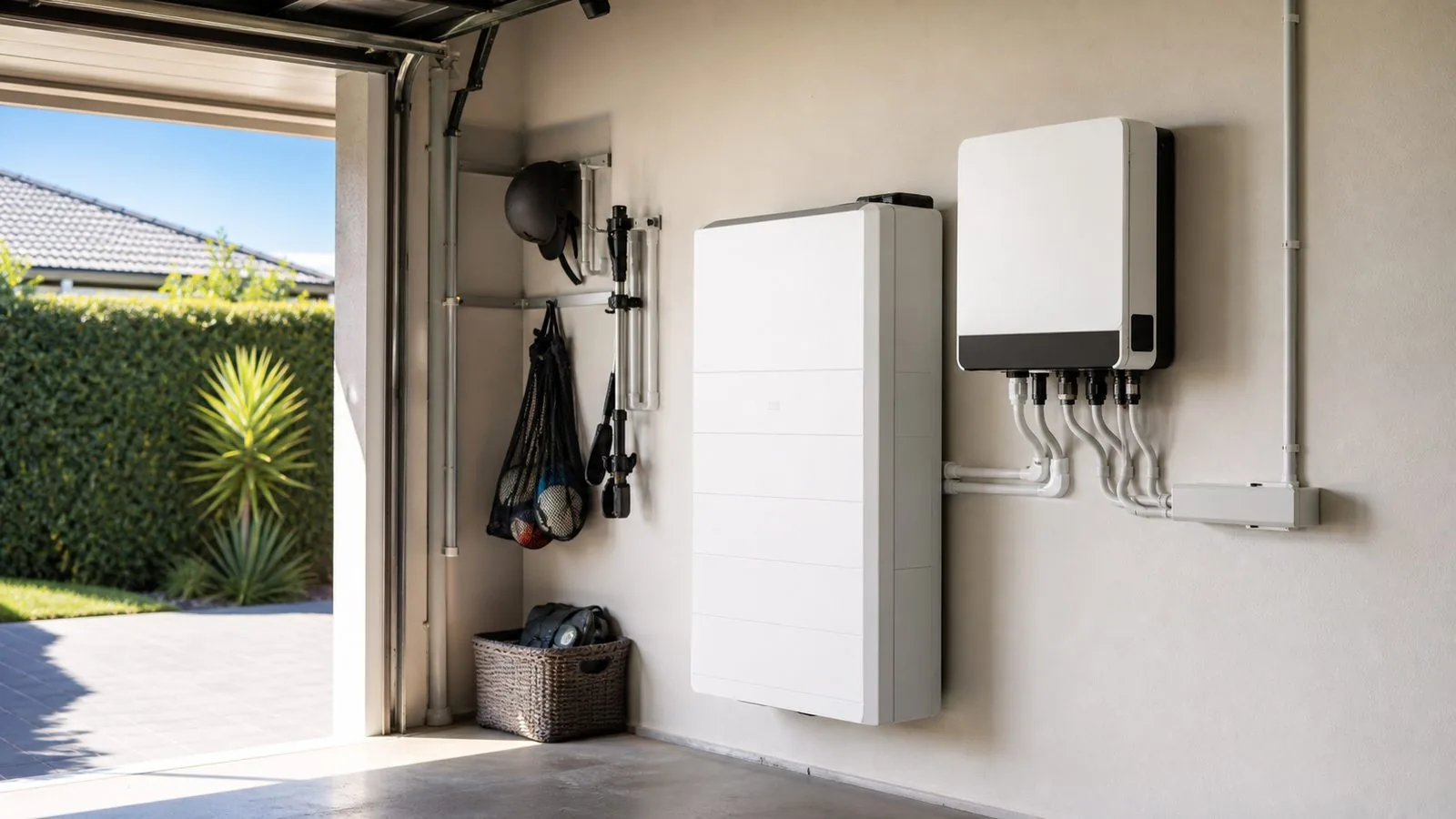
Start with the equipment, not the age of the house
Before asking which battery fits, identify the solar equipment already installed. Collect the inverter brand, full model, serial number and any available installation date. Find the original quote, handover folder and connection correspondence. Take photographs from ordinary accessible positions. A label on a closed inverter is useful; climbing onto the roof or opening an electrical enclosure is not a homeowner investigation.
A Bendigo home can have several generations of equipment. An older house in Eaglehawk might have relatively recent solar, while a newer property in Epsom may have had an early system enlarged. Do not assume the build date describes the solar installation. Note whether a second inverter, detached-building array or later panel addition exists. If records disagree with what is visible, flag the mismatch instead of choosing whichever document makes the proposed upgrade look easiest.
Also collect a sample of monitoring data and electricity use. The purpose here is to establish how the existing system behaves before adding another component. A record of normal operation gives the installer something to compare after the retrofit. If there is already an unresolved fault, ask whether it needs diagnosis first. Installing a battery should not turn an unexplained generation problem into a dispute about which contractor caused it.
Compare keeping the solar inverter with replacing it
There are different ways to connect storage. In an AC-coupled arrangement, solar and storage use separate inverter functions. A DC-coupled arrangement uses a hybrid inverter for the panels and battery. The Australian Government explains these arrangements, including why AC coupling is commonly used with existing solar. Neither label, on its own, establishes that a proposed package meets your requirements.
Ask for a retention option where it is technically suitable. This means identifying exactly which existing components stay in service and which new components are required. Then ask what a hybrid replacement changes: the solar connection, monitoring, backup functions, warranties and future expansion options. A replacement proposal should explain the limitation it solves rather than treating every older inverter as automatically unsuitable.
| Option to investigate | Question that tests its value |
|---|---|
| Retain existing solar inverter | Can the new battery deliver the desired functions alongside this exact model? |
| Replace with a hybrid inverter | Which existing panels and wiring can remain, and what redesign is included? |
| Repair solar before adding storage | What unresolved issue would otherwise complicate commissioning? |
| Stage the upgrade | What later work is genuinely supported, with what equipment restrictions? |
Compare the complete installed arrangements. A cheaper battery unit can require more integration work, while replacing working equipment may add little value if the functions you need are already achievable.
Require a model-specific compatibility answer
“Works with solar” is too broad to settle a retrofit decision. Request the exact battery model, inverter model, controller and any required gateway in the written proposal. Ask the installer to identify the manufacturer documentation supporting the proposed combination. If the answer depends on firmware, accessories or a particular product revision, include that detail in the scope. Brand names without model numbers leave too much room for substitutions.
For a hybrid proposal, have the designer assess the existing array rather than simply moving cables onto a new box. Ask whether the existing panel arrangement can be retained and whether changes to monitoring or protection equipment are included. These are design questions for the installer. You do not need to calculate electrical limits yourself to insist that someone has checked them and accepted responsibility for the result.
Be equally specific about future expansion. If you may add capacity later, ask what the manufacturer currently supports, what space and equipment would be required, and whether the promise depends on products remaining available. Write a distinction between a confirmed supported configuration and a possible future redesign. A salesperson's phrase “battery ready” is not a substitute for identifying the battery family and the work still needed to connect it.
A successful retrofit is not automatically an outage system
State whether you want storage only for ordinary grid-connected use or also for outages. If backup matters, name the appliances and circuits that should remain usable. Ask whether the existing solar inverter can contribute while the home is disconnected from the grid. Request a separate answer for each inverter if the property has more than one. This is especially important when one array was added after the original installation.
Manufacturer design limits can be specific. Tesla's Australian AC-coupled system guidance, for example, sets requirements for integrating existing solar with Powerwall. Use the applicable documentation for the equipment actually quoted; do not transfer a feature from one brand or model to another because both are described as home batteries.
Have the quote show any backup gateway, circuit changes, metering or control work needed for the agreed outcome. Ask what happens after the battery reaches its operating limit during an outage and what is needed to restart. A retrofit that supplies evening household loads while the grid is available can still have a different outage capability. The backup circuit guide helps turn that distinction into a written acceptance list.
Decide which app will describe the whole system
Ask to see an example of the proposed monitoring arrangement. Which app shows solar generation, which shows battery charge, and which measures power crossing the grid connection? Can you see household use directly, or does the app estimate it from other measurements? If the retrofit keeps an older inverter, you may retain separate accounts. That can be manageable, provided the installer explains what each display does and does not include.
Discuss existing timers and energy controls before they are left to interact. An EV charger, hot-water diverter or retailer-controlled battery service may have its own priorities. Give the installer a list of these devices and services. Ask who will configure them so the result follows your household preferences. A neatly installed battery is not the complete outcome if a separate controller immediately uses the energy you intended to retain.
Confirm the connection arrangements for monitoring and network communications. Identify who supplies any communications hardware, where it is placed and what happens if your internet changes. Ask for the user-level reconnection instructions at handover. Do not include passwords in a general quote enquiry. Access should be established through the provider's supported process, with the homeowner retaining control of their account.
Give old and new equipment clear responsibilities
A retrofit crosses a boundary between an existing installation and new work. Ask the contractor to describe that boundary in ordinary language. Their proposal should identify the condition checks they will perform on retained equipment, the alterations they accept responsibility for and any defects that must be resolved separately. This prevents “we only installed the battery” becoming the first answer when the combined system does not work as expected.
Request separate descriptions for equipment supply, electrical alterations, connection paperwork, monitoring setup and handover. If a switchboard assessment reveals additional work, ask how that will be reported and approved. Energy Safe Victoria's guidance highlights the need to assess an existing switchboard before adding a supplementary supply. A photograph may support preliminary discussion, but it should not be presented as proof that the board needs no further work.
Clarify support contacts before purchase. Who handles a battery alert, who handles a retained inverter failure, and who coordinates when the cause is unclear? Ask whether diagnostic visits, labour and manufacturer support are addressed in the written terms. Do not assume every warranty transfers or covers another contractor's work. Keep the actual terms together with serial numbers and invoices so a future support request begins with identifiable equipment.
Compare the finished behaviour, then the price
Write a short acceptance brief with the functions that matter to you. For normal operation, this might include seeing the battery charge, observing household supply after sunset and understanding the app's grid reading. For backup, add the circuit demonstration and solar behaviour already agreed. For an EV household, include the charging priority. Ask the contractor to explain how each outcome will be checked during commissioning.
Compare quotations against that brief before comparing totals. A proposal that omits backup wiring should not be treated as equivalent to one that includes it. A proposal retaining an inverter should say what it can still do after the battery is added. If two options genuinely deliver the same useful outcome, then equipment terms, support arrangements and the full installed scope become more meaningful comparison points.
After installation, keep a copy of the final equipment list and any changes from the quote. Confirm that app ownership is yours, labels and documents match the installed models, and the relevant connection process has been completed. Keep a small sample of the first normal operating data with the original baseline. That record is more helpful for later troubleshooting than trying to recall how a salesperson described the system months earlier.
Do not lose the original system during the upgrade
Before work begins, agree how retained equipment and its records will be protected. Ask whether the original monitoring history remains accessible and whether the new installer needs a supported service invitation. Keep your own copy of the original configuration documents. If equipment is removed, record its model and serial and agree what happens to it. This is particularly useful when the old inverter is still subject to an open support case or when a replacement is being supplied through a warranty process.
Ask how interruptions during the retrofit will be communicated. A household running a home business may need to arrange its day around electrical work. The contractor should describe the expected sequence and tell you which parts depend on inspection, connection processing or further investigation. Avoid treating an indicative installation date as proof that every feature will be ready for use that evening. Identify who will confirm each outstanding item.
At completion, compare the final equipment schedule with the accepted quote. If a model changed, ask for the revised compatibility explanation and the relevant manuals. Check that the new monitoring site shows the retained solar equipment as intended. Keep any exclusions visible, including a solar array that is deliberately outside backup or a separate app that must remain in use. This closes the integration work with a record of the actual system, rather than leaving the household to discover the substitutions later.
Questions about adding storage
Should I replace panels just because I am adding a battery?
Ask for the specific reason. Panel condition, an existing fault, desired output and compatibility with a changed inverter are separate considerations. A battery addition alone does not explain which panels need replacing. Request a retention assessment and the scope of any proposed replacement.
Can I use a different battery brand from my solar inverter?
Possibly, depending on the architecture and equipment. Ask for an exact supported design, including monitoring and backup limitations. A broad brand compatibility claim does not establish how the combination behaves in your particular installation.
What if the original installer has closed?
Gather invoices, serial numbers, manuals and any monitoring access you still have. Ask the new contractor what they can assess independently and which product support channels remain available. Missing records should be described as a gap to investigate, not filled with assumptions about the original installation.