
Confirm what equipment belongs with the property
Ask for a written equipment inventory rather than relying on a real-estate description such as “solar and battery included”. The useful list identifies the panels, each inverter, battery, gateway, monitoring device and any EV charger or hot-water controller. Note which buildings have equipment. A detached garage array or later battery addition may not appear in the original solar quote.
Have the seller or agent clarify what is included in the transaction and refer contractual questions to your conveyancer. Ask whether any equipment is subject to an agreement, finance arrangement or third-party service that needs separate attention. The ACCC describes different solar purchase arrangements; do not assume that every rooftop system was bought outright on identical terms. The point is to identify documents that need review, not to infer a legal position from the equipment's presence.
In an established Bendigo home, distinguish the age of the house from the age of the installation. Equipment may have been replaced or expanded. Ask which model is currently installed, rather than copying the first model mentioned in an old invoice. Photographs of accessible labels can help reconcile the inventory without opening covers or climbing onto the roof.
Build a handover folder before the move
Request the original invoices, installed-system design, operating manuals, electrical installation records and network connection correspondence. Add invoices for later repairs or replacements. Keep the documents in chronological order so it is clear which equipment each refers to. A warranty certificate for an inverter that has since been removed is history, not a complete record of the current system.
Ask the seller to identify missing documents honestly. If the original installer is no longer available, the absence of a handover folder does not establish that the system is defective, but it creates a gap to investigate. Request advice from an appropriately qualified contractor about what can be checked on site and what can be recovered from the manufacturer or other responsible party. Do not let missing records become invented dates or capacities in a new report.
Separate routine house documents from sensitive account access. Manuals and model details can be shared in the property handover folder; personal account passwords should not be. Keep any private proof-of-ownership documents for the provider's supported transfer process. A tidy document set makes it easier to arrange future service because you can identify the equipment and its history without relying on the former owner's memory.
Ask what the available performance evidence proves
A photograph of an illuminated inverter shows a moment, not a complete performance history. Ask for recent monitoring records and an explanation of what they measure. Generation, household use, battery activity and exports are different figures. If the seller offers a low electricity bill as evidence, ask what occupancy, heating, vehicle charging and tariff applied during that period. Your household may use the same home differently.
Look for continuity in the records rather than a single impressive day. Note any unexplained gaps, repeated alerts or recent changes. Ask whether an apparent gap reflects lost monitoring access or a period when the system was unavailable. Neither possibility should be silently assumed. The solar monitoring guide helps separate those questions before an inspection or support call.
If the purchase depends on a particular capability, such as backup or expected output, ask for an assessment that specifically addresses it. A general building inspection may have a different scope. Give the electrical contractor the equipment inventory and documents in advance, and ask what their report will cover. Avoid treating a visual inspection as a guarantee of every hidden component or future performance. The useful outcome is a clear account of what was checked and what remains uncertain.
Transfer the system, not the seller's password
Identify every monitoring service used by the installation. Solar and storage may have separate apps, while an EV charger can have another account. Ask who currently owns each site in the provider's system and how ownership should be transferred. Start identifying the process before settlement, then complete the steps at the appropriate stage with the responsible parties.
Tesla's Australian Powerwall registration guidance includes an ownership transfer route. Other manufacturers have their own processes. Use the instructions for the equipment installed at the house rather than creating a duplicate site or accepting the previous owner's personal login. Ask what information the provider requires and which party needs to initiate the transfer.
Once access is established, confirm the site address and equipment shown in your account. Check who else retains authorised access and use the provider's supported controls to manage it. If the installer needs service access, understand that role separately from ownership. Keep evidence that the transfer is complete. Seeing a screenshot supplied by the seller is not the same as being able to log into your own account and obtain support.
| Handover item | Useful completion check |
|---|---|
| Equipment inventory | Models match the visible installation and latest records |
| Monitoring ownership | Your own account displays the correct site |
| Backup scope | Included circuits and exclusions are described |
| Support information | A named provider and the applicable documents are available |
Check the battery's actual operating arrangement
If the home includes a battery, ask whether it provides backup and which circuits are included. Do not infer this from a sales listing or the fact that storage is installed. Ask for the circuit schedule, reserve policy and instructions for recognising an outage. If the seller says the entire home runs during a blackout, request the actual design and operating limitations supporting that statement.
Explain your intended household use when arranging an assessment. You may add an EV, use a room as a home office or rely on a different heating pattern. The seller's settings may have suited their needs and electricity plan without suiting yours. Ask which settings are ordinary homeowner controls and which require the installer. Avoid entering protected menus simply to make the system behave like an online example.
Ask for an installer-led explanation or demonstration where needed. Do not test backup by improvising electrical isolation during an open inspection. Keep the manufacturer's instructions accessible after the move, including what to do if an alert appears. The backup circuit guide provides questions to resolve before relying on the system for refrigeration, communications or other household needs.
Find the right support path for each component
Collect the product warranty documents and installation terms that apply to the actual equipment. Ask the relevant provider to explain ownership transfer requirements, registration and what evidence is needed for a claim. Do not assume a remaining warranty term from the house listing. Product warranties, installation workmanship and service arrangements can involve different parties and different documents.
Record the original installer, any replacement contractor and the manufacturer support contacts. Ask whether there are open faults, pending claims or equipment awaiting replacement. Request copies of relevant correspondence so a support case does not disappear when the seller changes address. An unresolved issue is easier to manage when its history and responsible contact are clear.
For a mixed installation, ask who can assess the combined system if the cause of a problem is unclear. A retained solar inverter and a newer battery may have different suppliers. The service brief should identify what the contractor will investigate rather than assuming the newest component caused every symptom. Keep original purchase and transfer evidence with the serial numbers; these records can matter when a provider needs to confirm the equipment and ownership history.
Recheck the setup once the house is yours
A new internet service is an ordinary part of moving, but it can also change solar monitoring connectivity. Follow the product's user-level reconnection process and check that data begins updating. Keep a note of the move date and any network changes. If an app stays offline, provide that timeline to support rather than assuming the inverter failed on the day you arrived.
Check the operating preferences against your electricity plan and routine with the appropriate provider. Confirm battery reserve, vehicle charging and other schedules rather than accepting them indefinitely as house defaults. Ask your electricity retailer about the account and export arrangements applying to you. Do not assume the seller's plan, credits or service membership automatically describe your new account.
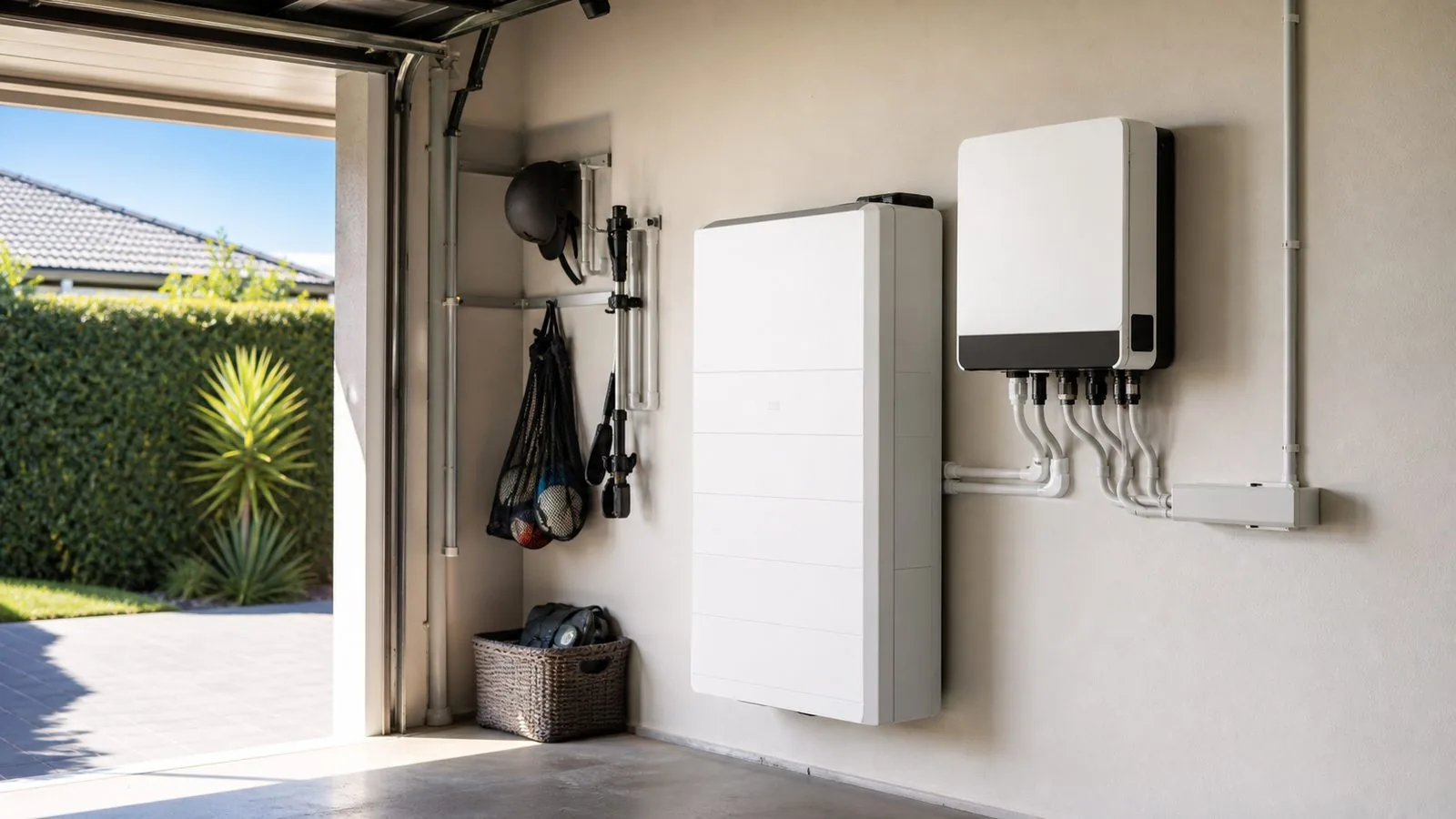
Keep the battery area accessible as furniture and boxes arrive. A garage wall that was clear during inspection can become a convenient storage area on moving day. Read the supplied location and safety instructions before adding shelves or screens nearby. If a renovation is planned, show the equipment and its requirements to the relevant trades early. Your new use of the property should be considered alongside the inherited electrical installation.
During the first normal period of occupancy, save a few clearly labelled monitoring records and note the household activity they represent. This becomes a baseline for your ownership rather than a comparison with a previous family's lifestyle. If something appears wrong, report the observed behaviour, date and equipment alert. That gives a contractor a concrete starting point without requiring you to diagnose the system yourself.
Turn unresolved items into a handover list
Before the move, keep a short list with an owner beside each unresolved item. The seller may be locating an invoice, the manufacturer may be processing an account transfer and an electrician may be arranging an assessment. These are different tasks. Record what evidence will close each one, such as your own working login or receipt of the current equipment schedule. Avoid marking everything complete because a person has promised to investigate.
Keep contractual decisions with the adviser handling the purchase. Your technical questions can identify a missing record or uncertain capability, while the adviser can explain how that affects the transaction. Do not let a contractor's informal reassurance replace a question that needs to be addressed in the sale documents. Equally, a contractual inclusion does not substitute for understanding the equipment's operating instructions.
After settlement, revisit the list and retain only genuinely unresolved items. Confirm that transferred accounts show fresh data and that any agreed assessment report has been received. If a support process is still open, keep the case reference and contact path. This gives the new household a manageable starting point instead of a folder of unanswered emails. It also helps avoid buying replacement equipment simply because nobody completed the original access transfer or explained how the existing system was meant to operate.
Questions from home buyers
Does missing paperwork mean I should replace the system?
No. It means the records and condition need investigation. Ask what can be recovered and what an appropriately scoped inspection can establish. Replacement should follow an identified reason, rather than becoming the default answer to an incomplete folder.
Can I judge the system from the seller's electricity bill?
A bill helps describe that household's use and tariff for a particular period. It does not independently establish equipment condition or your future bill. Combine it with system records, monitoring context and an assessment appropriate to the decision you are making.
What should be resolved before relying on battery backup?
Obtain the circuit list, operating limitations and instructions, and have any uncertainty assessed by the relevant installer. Confirm that your household's needs match the supported arrangement. A battery visible on the wall is not a complete backup handover.